
Thursday, January 29, 2015
Sylvia Earle's TED Wish
Please take the time to watch this, her speech is phenomenal and this is SO important to everything on this planet.

Wednesday, January 21, 2015
The UNICEF Tap Project
Though this blog is largely dedicated to helping animals, humanity often lacks compassion towards those of its own species. I stumbled upon this UNICEF Tap Project today and I am absolutely in love with it. It's kind of fun and interesting to see how long I can go without moving my phone and the fact that putting down my iPhone for just 10 minutes a day can provide 1 day of clean water to someone in need is so intriguing.
If you want to try it out visit the UNICEF Tap Project website here, and don't worry- it's free! Donation is optional of course but I find the no-phone thing to be more fun.
If you want to try it out visit the UNICEF Tap Project website here, and don't worry- it's free! Donation is optional of course but I find the no-phone thing to be more fun.
Tuesday, January 20, 2015
The Chipotle Pork Shortage: A Prelude
I don't feel that I have yet acquired enough information to write a comprehensive post about activism in larger chain restaurants, but I did want to bring the Chipotle pork shortage into the spotlight. I've never been a huge fan of Chipotle (I just never really liked their food even when I ate meat), but this article did earn them some of my respect. I learned that Chipotle greatly values the treatment of the livestock they sell to their customers, especially the pigs that go into their pork. When the company discovered that some of the facilities they were receiving pork from had fallen behind the curve, they stopped selling meat from those providers. This has caused a number of Chipotle locations to stop offering pork options on their menus. Chipotle also prides themselves on using organic and non-GMO products, another discovery I made while researching this article. I definitley like where they're headed with their ethics, though of course there is always room for improvement (meant in the least sassy way possible).
Adele Douglass, the executive director of Humane Farm Animal Care (and she has my vote on this one), still holds hope that the government will provide loans to farmers in order to better maintain "sustainable" conditions for the animals.
Chipotle also tries to use humane beef, but finds themselves slipping up on that front more often than pork. I think this is a step forward for consumer-centered society. How big that step is is yet to be determined but I'm very proud of Chipotle for how their holding up.
 |
| Photo from One Green Planet |
I will start that information accumulation for a larger article though (fingers crossed), however I may not get around to it until closer to the summer time (AP's, Finals, College Prep, etc).
To read the whole Huffington Post article, click here
Wednesday, January 14, 2015
Ethical Foie Gras?
A little while ago, I posted an opinion about Foie Gras (which you can read here) and how I believe the ruling to lift the ban should be overruled. Although I still hold fast to that opinion, I recently stumbled upon an article concerning "ethical foie". I do not recommend eating foie gras in any form for health reasons, but if one does choose to consume it, I would suggest only from a reliable source that does not promote the industrial-agricultural complex.
The Guardian posted an article online this morning about a farm in Spain where the geese are treated properly before being turned into human fodder. The geese on Eduardo Sousa's voluntarily devour the food given to them by the friendly farmer until their liver naturally changes to the state in which it is considered for foie gras. Sousa is very attached and empathetic to his animals, even when describing their demise he says, "We slaughter them by group, if you leave some of them they become very sad, they’re widows. But I’m confident that with the way we do it, the animal doesn’t suffer at all.” Sousa also scorns the path industrial foie gras has taken by saying that "[the foie gras industry] has gone too far...These are animals that have a family, that fall in love, that are intelligent. When you see this animal in a cage with all these machines, you know it is suffering.”
As I mentioned before, I am fully supportive of the repeal of the most recent ruling, however, should it stay in place, I believe Sousa is on to something sustainable. The animal's bodies transform to the condition needed naturally, and they are allowed to experience their lives as natural geese; in the sun, with mates and community. No cages needed. Should the California ruling stay in place, this is the next step that needs to be taken- foie gras must be made ethical, or not made at all.
To Eduardo Sousa I say: Gracias, bravo y buen suerte
The Guardian: Can foie gras ever be ethical?
The Guardian posted an article online this morning about a farm in Spain where the geese are treated properly before being turned into human fodder. The geese on Eduardo Sousa's voluntarily devour the food given to them by the friendly farmer until their liver naturally changes to the state in which it is considered for foie gras. Sousa is very attached and empathetic to his animals, even when describing their demise he says, "We slaughter them by group, if you leave some of them they become very sad, they’re widows. But I’m confident that with the way we do it, the animal doesn’t suffer at all.” Sousa also scorns the path industrial foie gras has taken by saying that "[the foie gras industry] has gone too far...These are animals that have a family, that fall in love, that are intelligent. When you see this animal in a cage with all these machines, you know it is suffering.”
As I mentioned before, I am fully supportive of the repeal of the most recent ruling, however, should it stay in place, I believe Sousa is on to something sustainable. The animal's bodies transform to the condition needed naturally, and they are allowed to experience their lives as natural geese; in the sun, with mates and community. No cages needed. Should the California ruling stay in place, this is the next step that needs to be taken- foie gras must be made ethical, or not made at all.
 |
| Photo from Swide.com |
Sousa's Website
Tuesday, January 13, 2015
Monday, January 12, 2015
Corey Knowlton and the Black Rhino
 |
| Photo provided by NBC |
- The African Black Rhino is extremely endangered (only 5,055 left in the wild)
- Females are pregnant for 15-17 months and calves stay with their mothers for 2-4 years (This means less babies less often)
- Black Rhinos live up to 30-35 years in the wild (35-45 in captivity)
- More male calves are born than female calves (less babies again)- however males tend to have a higher mortality rate (still not good)
- Poachers are the biggest threat to the rhino population
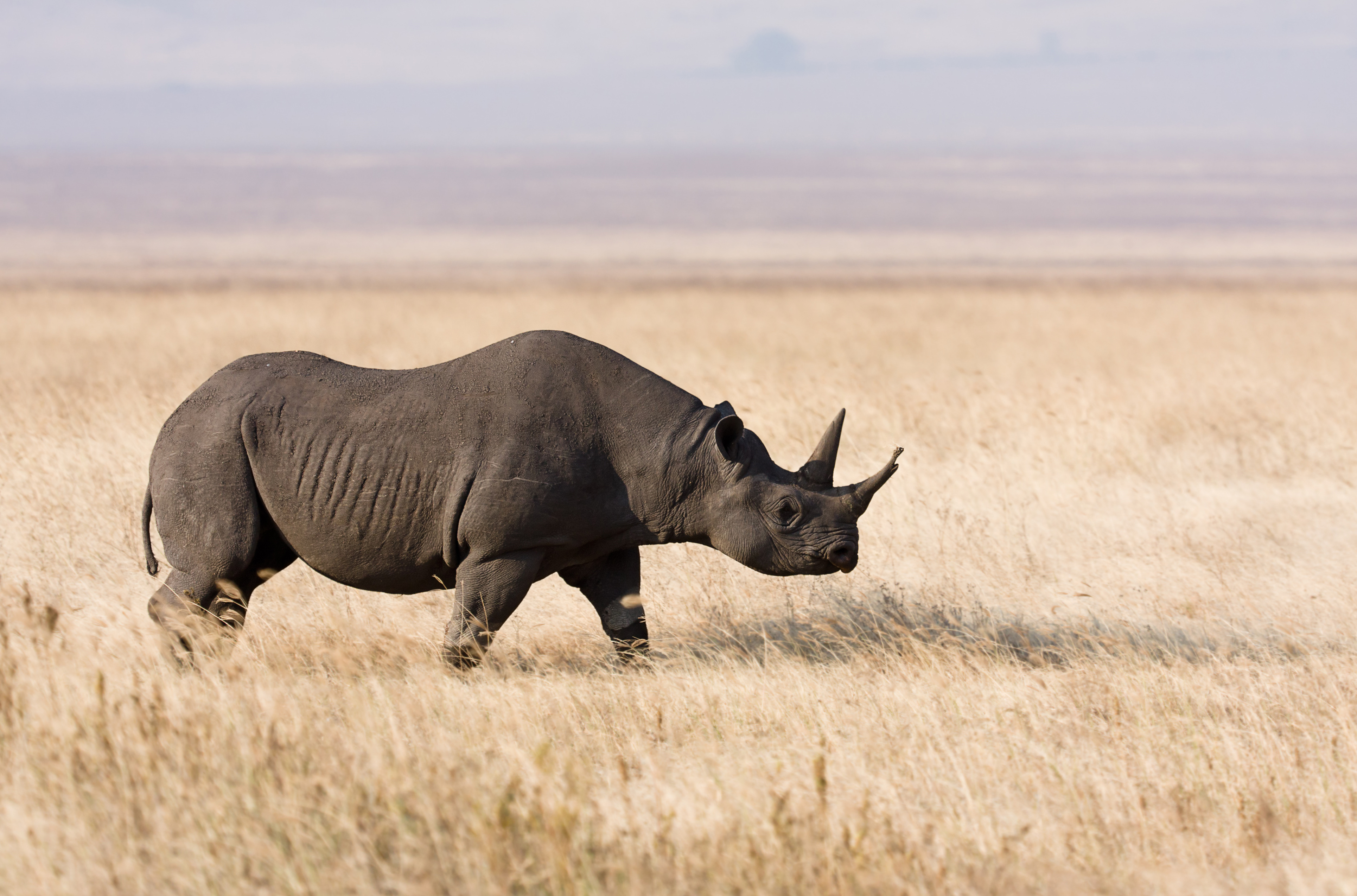 |
| Photo from Wikipedia |
Ben Carter, the director of the Safari Club, argues the rhino being targeted is "old, male and non-breeding and is likely to be targeted for removal anyway because it [is] becoming aggressive and threatening other wildlife." Does this impact the value of the rhino's life? Are we the ones to judge the male's practicality in the population? Perhaps we have the data, but we do not possess the empathy.
I do not believe Knowlton is the enemy, I believe he is the embodiment of a larger problem; the lack of value that humans hold for other earthlings. Knowlton, who is scheduled to rob the life of this rare beast, stated that he "deeply care[s] about all of the inhabitants of this planet and [he] is looking forward to more educated discussion regarding the ongoing conservation effort for the Black Rhino." Knowlton has also acknowledged that he sees both sides of the argument, and holds to his reasoning as the fact that he "want[s] to experience a black rhino. [Knowlton] want[s] to be intimately involved with a black rhino." This man does not deserve to die for his actions. Reprimanded? Yes. Fined for the catch if he does harm the animal? Definitely. But death is not the answer.
 |
| Knowlton with a recent kill (Photo from Independent.co.uk) |
After all, one of the reasons the message for animal rights is often misconstrued or pushed aside is because all the public is shown is radical and violent displays of the cause. I believe Knowlton's license for the rhino hunt should be immediately revoked, no matter how much he spent on it. There are peaceful ways to share experiences with the other beings of this earth, a (peaceful) safari trip to and African country that the rhino inhabits (Kenya, Zimbabwe, South Africa) could provide a similar connection without the premature loss of energy in that ecosystem. Do not blame Knowlton, but do prevent him, for the sake of a disappearing species.
Big-game hunters in Texas bid for licence to kill one of Africa’s rare black rhinos
Hunter who paid $350,000 to kill a black rhino defends his actions in face of backlash
Black rhino hunter Corey Knowlton receives death threats after winning license to shoot endangered animal
Rhino Facts:
Black Rhino Profile
Rhino Population Figures
National Geographic
Friday, January 9, 2015
Apes Are People Too
And no, I don't mean in the Planet of the Apes fashion.
Animals, in a lot of nations in the world, are considered "things" not beings and are therefore deprived of rights and just treatment. However, in December of 2014, an orangutan named Sandra residing the Buenos Aires Zoo in Argetina was granted the legal standing of "nonhuman person." By granting Sandra legal personhood, the court acknowledged that the ape was in psychological pain and required her treatment to improve. She is now on her way to a reserve in Brazil where she can live peacefully. The Baleric Islands of Spain granted personhood to all great apes in 2007, and the Spanish parliament decided that apes should be treated like unaccountable humans (such as children or the mentally incapacitated) and receive the same rights. Swiss law also recognizes all animals as beings and not things, thus providing them with more protection.
Having animals, not just apes (though that is wonderful), recognized as beings is a major step forward on a global scale. Sadly the creatures inhabiting the United States have yet to achieve this status, but I believe as other nations lead by example, the rest will soon follow. Sandra's story is beautiful in that she can now live out her days without the emotional and psychological stress of being a display piece for the masses. I am truly glad that Argentina has allowed her this chance, and that nations like Spain, Switzerland, and India are taking similar steps. Animals are creatures that can experience fear, pain, love, and content; just like humans can. If we ourselves would not want to live in a cage, why should we force others to endure such conditions?
Huffington Post : Legal Personhood for Apes
TIME: In Argentina, a Court Grants Sandra the Orangutan Basic Rights
BBC: Court in Argentina Grants Basic Rights to Orangutan
Animals, in a lot of nations in the world, are considered "things" not beings and are therefore deprived of rights and just treatment. However, in December of 2014, an orangutan named Sandra residing the Buenos Aires Zoo in Argetina was granted the legal standing of "nonhuman person." By granting Sandra legal personhood, the court acknowledged that the ape was in psychological pain and required her treatment to improve. She is now on her way to a reserve in Brazil where she can live peacefully. The Baleric Islands of Spain granted personhood to all great apes in 2007, and the Spanish parliament decided that apes should be treated like unaccountable humans (such as children or the mentally incapacitated) and receive the same rights. Swiss law also recognizes all animals as beings and not things, thus providing them with more protection.
Having animals, not just apes (though that is wonderful), recognized as beings is a major step forward on a global scale. Sadly the creatures inhabiting the United States have yet to achieve this status, but I believe as other nations lead by example, the rest will soon follow. Sandra's story is beautiful in that she can now live out her days without the emotional and psychological stress of being a display piece for the masses. I am truly glad that Argentina has allowed her this chance, and that nations like Spain, Switzerland, and India are taking similar steps. Animals are creatures that can experience fear, pain, love, and content; just like humans can. If we ourselves would not want to live in a cage, why should we force others to endure such conditions?
 |
| Sandra waving from her zoo habitat in 2010 (Photo by TIME) |
Huffington Post : Legal Personhood for Apes
TIME: In Argentina, a Court Grants Sandra the Orangutan Basic Rights
BBC: Court in Argentina Grants Basic Rights to Orangutan
Subscribe to:
Posts (Atom)